
A landmark initiative in China-Zimbabwe relations was unveiled this week as the China-Zimbabwe Agricultural Cooperation Demonstration Village was officially commissioned in the Shamva District of Mashonaland Central Province. The project, inaugurated on May 14, 2025, marks a significant step in enhancing agricultural productivity and supporting rural communities in Zimbabwe through a blend of modern technology and traditional farming practices.
The ceremony, attended by Chinese and Zimbabwean officials, local villagers, and dignitaries, showcased the deepening strategic partnership between the two nations. Chinese Ambassador to Zimbabwe, Zhou Ding, joined Zimbabwe’s Deputy Minister of Lands, Agriculture, Fisheries, Water, and Rural Development, Vangelis Haritatos, to formally launch the initiative. A large stone plaque bearing the flags of both countries and the project’s name—etched in both English and Chinese—was unveiled, symbolizing the collaborative spirit of the venture.
“This demonstration village is not just another agricultural venture; it is a living laboratory of innovation, a bridge between traditional knowledge and modern technology, and a testament to South-South cooperation,” Haritatos declared during the launch. He emphasized the shared vision for agricultural transformation, noting that the project addresses the needs of rural Zimbabweans, where over 60% of the country’s 16.6 million population resides, according to the 2024 Zimbabwe National Statistics Agency census.
The China-Zimbabwe Agricultural Cooperation Demonstration Village, located in Zindi Village, is a flagship project spearheaded by the China National Agricultural Development Group Corporation (Chinaagri_group). Over the past year, the group has installed critical infrastructure, including solar-powered boreholes, an irrigation scheme, and hatcheries.
The initiative also introduced high-yield crop varieties and provided hands-on training in crop cultivation and poultry breeding to local farmers. These efforts aim to empower disadvantaged communities to break the cycle of poverty and unlock their agricultural potential.
Ambassador Zhou Ding highlighted the project’s broader impact, stating, “With over 60% of Zimbabwe’s population living in rural areas, it is essential to support rural residents, especially those from disadvantaged communities, in breaking the chains of poverty and unlocking their full potential.” He shared moments from the event on social media, including a lighthearted exchange where he sampled a chili grown in the village, noting its mild flavor despite his northern Chinese roots.
The project directly addresses pressing climate challenges in Zimbabwe, where decreased rainfall, extreme heat, and water scarcity have severely impacted rural livelihoods.
These conditions, exacerbated by climate change, have also led to increased human-wildlife conflict as communities and animals compete for dwindling water resources. The installation of solar-powered boreholes aligns with previous efforts in the region, such as the 2023 WWF Climate Crowd initiative, which drilled boreholes up to 90 meters deep in Manjolo and Pashu wards to improve water security.
Officials from both nations were seen inspecting the new water infrastructure, with one official testing a borehole’s flow, while others toured fields of vibrant crops, including rows of chili plants.
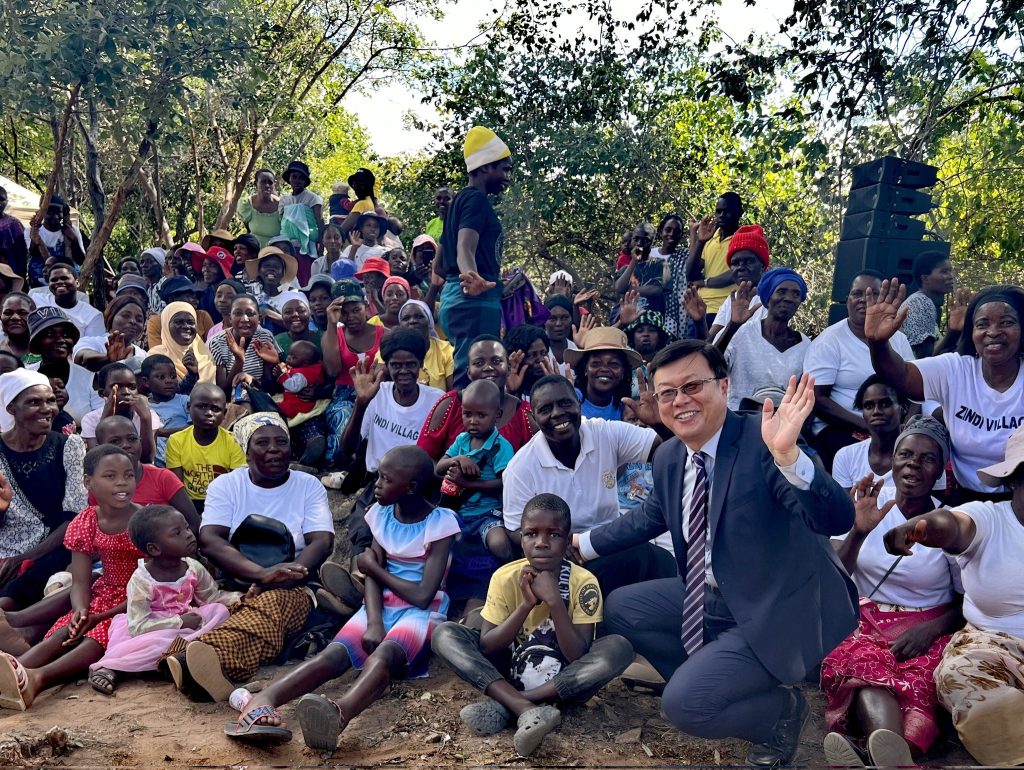
This initiative is part of a broader trend of Chinese agricultural aid in Africa, often framed as South-South cooperation. A 2024 study published in ScienceDirect highlighted the impact of China’s Agriculture Technology Demonstration Centers (ATDCs) across the continent, noting their role in improving crop production and food security.
The Zindi Village project builds on this model, tailoring solutions to Zimbabwe’s unique challenges, such as water scarcity—a persistent issue in urban and rural areas alike, as noted in a 2022 UNICEF report on Harare’s water rationing struggles.
The China-Zimbabwe Agricultural Cooperation Demonstration Village is poised to serve as a model for sustainable rural development, offering a blueprint for other regions facing similar challenges. As climate change continues to strain resources, such collaborative efforts underscore the importance of international partnerships in fostering resilience and growth.
For the people of Zindi Village, the project represents more than infrastructure—it’s a beacon of hope. “This borehole means we no longer have to walk miles for water,” said a local farmer, gesturing toward the steady stream flowing from the new pump. “Now, we can grow more, eat better, and live better.”