
Africa’s electric-vehicle revolution may not begin with expensive electric cars.It may begin with the motorcycle.Across the continent, motorcycles and three-wheelers are already part of everyday economic life.
They carry passengers, deliver food and packages, transport agricultural goods and connect communities to markets.Now, an increasing number are going electric.
According to Associated Press reporting, African imports of electric motorcycles and three-wheelers from China rose 60% during the first half of 2026, reaching approximately $114.6 million.
The numbers point to a broader shift: Africa is developing an electric-vehicle market around the forms of transport it already uses, while Chinese manufacturers are supplying much of the technology.
An EV Revolution Built Around
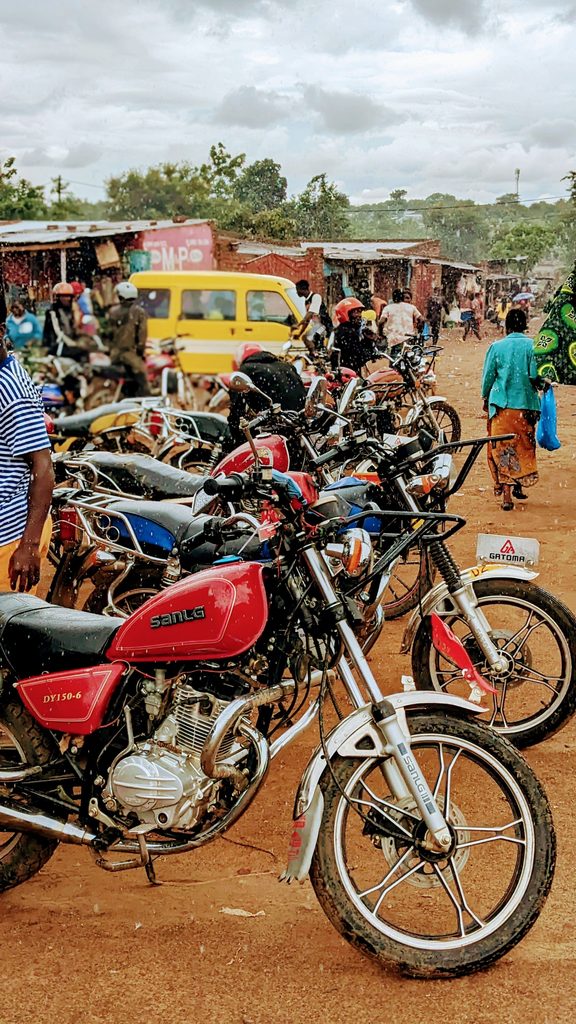
MotorcyclesElectric vehicles are often associated with cars. But Africa’s transport economy is different.In countries such as Kenya, Uganda and Nigeria, motorcycles are deeply integrated into commercial transportation. A motorcycle can simultaneously be a taxi, delivery vehicle and the livelihood of its owner.
For these riders, the attraction of an electric motorcycle is not necessarily environmental.
It is economic.
Fuel is one of the biggest operating expenses for a commercial rider. Reducing petrol consumption can directly affect daily income, while electric motors can also reduce some maintenance requirements.
This gives electric motorcycles a potentially important advantage: they can make economic sense before they become a luxury purchase.
China Supplies the Technology
China has developed enormous manufacturing capacity in electric motors, batteries, electronics and vehicles.That industrial base is increasingly connecting with African demand.
North Africa is seeing strong imports of fully assembled electric scooters. Morocco, for example, imported more than 80,000 electric bikes worth about $21.7 million during the first half of 2026, according to AP reporting.
Elsewhere, particularly in East and West Africa, electric motorcycles are increasingly being adapted for commercial operations.
The result is not one African EV market, but several different markets developing around local transport needs.
The Battery Becomes Part of the Business
One of the most significant developments is battery swapping.For a commercial motorcycle rider, waiting several hours for a battery to charge can mean losing working time.
Battery-swapping stations offer another model. A rider can exchange a depleted battery for a charged one and continue working, while the depleted battery is recharged at the station.
This creates an entirely new business around the motorcycle.
The vehicle requires:
• batteries;
• swapping stations;
• charging infrastructure;
• technicians;
• software;
• financing;
• fleet management;
• maintenance;
• electricity.
The motorcycle therefore becomes more than a vehicle. It becomes the centre of an emerging transport and energy ecosystem.
From Chinese Imports to African Industry
The long-term economic question is what happens after the vehicles arrive.
At present, many African operations still depend heavily on Chinese components, including motors, controllers and battery cells.
But local businesses can increasingly participate in assembly, maintenance, financing, fleet management and infrastructure.
A simplified industrial chain looks like this:Chinese technology → African imports → local assembly → battery networks → transport businesses → local services → potential manufacturing
That distinction matters.
There is a major difference between simply importing finished vehicles and developing an industry around those vehicles.
Local assembly creates skills.
Battery networks create infrastructure. Maintenance creates technical employment. Financing creates financial services. Fleet operations create businesses.
Over time, some components can potentially be manufactured locally as well.
Africa Could Follow a Different EV Path
Africa does not necessarily have to reproduce the electric-vehicle transition seen in Europe, China or North America.
The first major wave of African electrification may not consist of millions of private electric cars.It could consist of commercial motorcycles, delivery vehicles and three-wheelers.
A motorcycle taxi driver who travels long distances every day has a different economic calculation from a private car owner.
For that reason, Africa may potentially electrify commercial transport before private cars.
That could make the motorcycle one of the continent’s most important entry points into electric mobility.
The Fuel-Import Question
The consequences extend beyond transportation.
African economies spend large amounts of foreign currency importing petroleum products. Replacing petrol-powered motorcycles with electric alternatives could reduce some of that demand.
AP reporting cited estimates that widespread motorcycle electrification could eventually displace approximately $600 million in fuel imports in Uganda and between $600 million and $800 million in Kenya.
These are estimates of potential future savings, not current savings.
Nevertheless, the economic implications are significant.Electric motorcycles could become part of a broader conversation about energy security, foreign exchange, transport costs, business profitability and fuel dependence.