
On April 20, 2025, the world will mark International Chinese Language Day, a celebration initiated by the United Nations in 2010 to honor the cultural and linguistic significance of Mandarin, the most spoken language globally with over 1.3 billion native speakers, according to worlddata.info.
This day, aligned with the Chinese solar term Guyu, commemorates Cangjie, the mythical inventor of Chinese characters, as chosen by China’s UN delegation to promote linguistic diversity.
Mandarin, one of the six official UN languages since 1946, gained prominence after 1971 when the People’s Republic of China assumed its UN seat, enhancing its use in international diplomacy.
This year’s festivities, including cultural exhibitions and language forums at UN headquarters in New York and beyond, underscore Mandarin’s global reach—nowhere more evident than in Africa.

Mandarin’s Rising Tide in Africa
Africa is witnessing a remarkable surge in Mandarin’s influence, driven by China’s expanding economic footprint.
Countries like Tanzania and Kenya have integrated Mandarin into their educational curricula, with Tanzania including it in national college entrance exams and Kenya promoting it alongside French and Arabic.
This trend is fueled by Confucius Institutes and Classrooms, which have grown to 48 centers across the continent since the first opened in Nairobi in 2005.
These institutions offer language training, cultural exchange, and professional development, with teachers trained by Confucius Institute tutors.
Economic incentives further propel this growth: a 2021 World Population Review highlights that South Africa, Nigeria, Mauritius, and Madagascar host significant Chinese-speaking communities, boosting demand for Mandarin skills.
Translators in these regions can earn up to five times the minimum wage, reflecting the language’s economic value in trade, manufacturing, and construction sectors.
Despite its benefits, concerns linger about cultural influence and dependency. Professor Russell Kaschula of Rhodes University notes that while learning Mandarin is strategic given China’s role as a major trading partner, it requires balancing with local languages to preserve cultural identity.
Nonetheless, the language opens doors to scholarships, internships in China, and jobs with Chinese firms, making it a gateway to global opportunities for African youth.
Learning Mandarin: Opportunities and Innovations
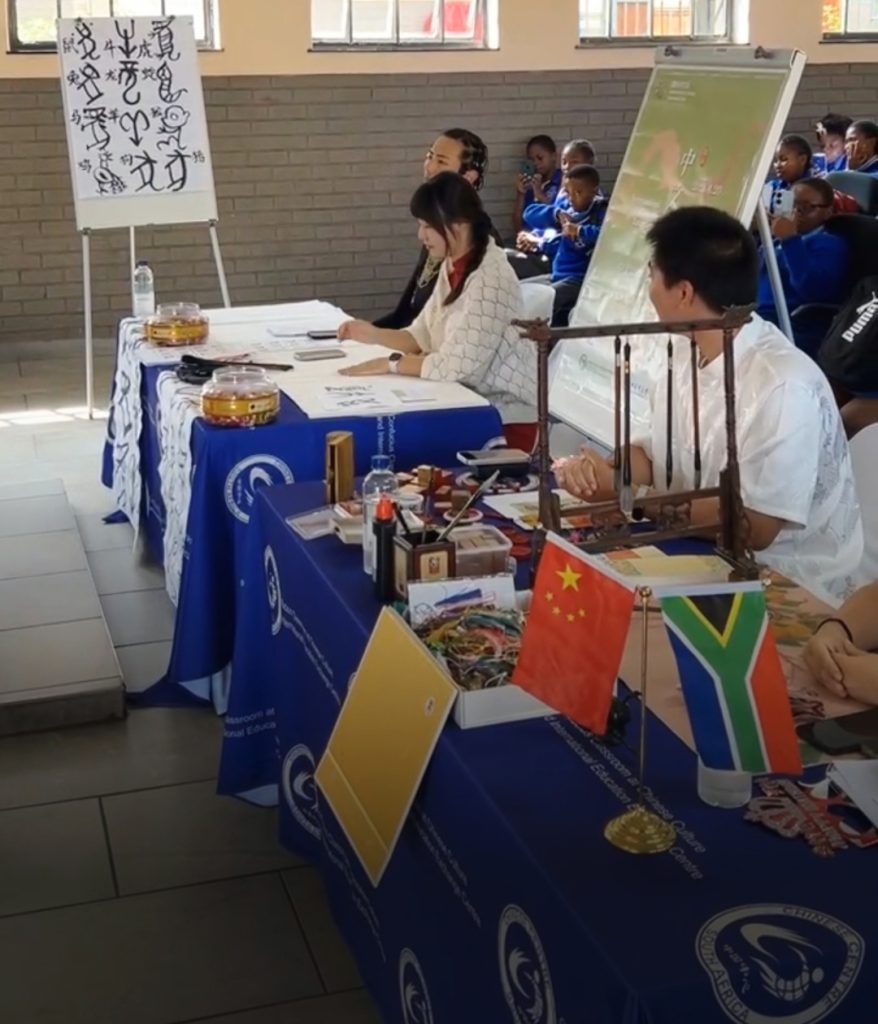
In South Africa, the Katlehong Engineering School of Specialisation (Katlehong SoS) is commemorating 2025 International Chinese Language Day with activities focused on Chinese characters, encouraging high school pupils to recognize Mandarin’s global impact.
The school has introduced a Confucius Classroom for grade 8 pupils, offering a structured curriculum to learn Mandarin and prepare for Level 3 exams.
This initiative targets underprivileged students, providing scholarships and employment prospects with Chinese companies operating locally, aligning with the broader African trend of leveraging Mandarin for economic mobility.
Beyond formal education, diverse learning options abound. Online platforms like ConfuciusClassroom.co.za offer flexible courses, allowing students to earn certificates remotely while balancing work or studies.
Apps such as Duolingo and HelloChinese provide interactive lessons, while cultural immersion through UN-sponsored trips to China offers practical experience.
Community programs and partnerships with Chinese-funded enterprises also foster language skills, blending education with real-world application.
As Mandarin weaves into Africa’s fabric, International Chinese Language Day 2025 serves as a reminder of its transformative potential, bridging cultures and economies while empowering a new generation of global citizens.